


Revitalizing Wauchula City Hall Auditorium with Modern Historic Theater Systems
A nearly century-old auditorium asks a simple but difficult question: how do you prepare a historic room for modern performance without erasing the character that made it worth saving?
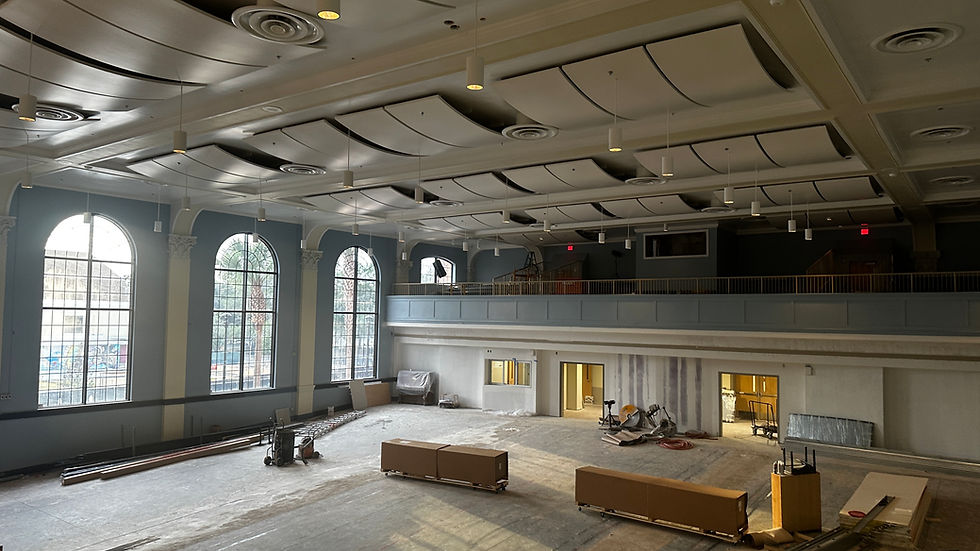
That question sits at the center of the ongoing renewal of the Wauchula City Hall Auditorium in Wauchula, Florida. Originally constructed in 1926, the auditorium has served generations of residents, performers, touring artists, and community groups. For many in Hardee County, it is more than a performance space. It is a civic landmark, a gathering place, and a reminder of how public buildings can shape local cultural life.
At SK Design & Consulting LLC, we are proud to support the City of Wauchula and the broader design team as this historic auditorium moves into its next chapter. Our role focuses on theatrical systems that can support contemporary use while respecting the limits, code needs, and historic fabric of the existing building.
The current renovation effort includes important life safety upgrades, modernization of building systems, and replacement of the original counterweight rigging system. The work also includes related mechanical, electrical, and fire protection considerations that must be coordinated carefully in a room where space is limited and history matters.
A civic auditorium with a long community history
The Wauchula City Hall Auditorium dates to 1926, a period when civic buildings often combined government, public gathering, and cultural functions under one roof. Auditoriums like this were designed to bring people together. They hosted performances, ceremonies, lectures, meetings, and events that helped define the rhythm of local life.
That long history gives the current renovation its weight. This is not a blank-slate theater project where every system can be designed around new construction. The building already has a form, a structure, and a memory. Any new theatrical system has to fit within that existing framework.
That creates a different design mindset. Instead of asking only what a modern theater needs, the team also has to ask what the building can reasonably accept. The answer often lies in careful coordination, selective intervention, and a clear understanding of which historic elements can remain and which systems need to change.
For the auditorium, one major area of focus is the stage rigging system. Original counterweight rigging systems were common in theaters for decades. They allowed crews to raise and lower scenery, curtains, lighting positions, and other stage elements using balanced loads and manual operation. In the right conditions, these systems can be effective. Over time, though, older rigging systems can fall behind current expectations for safety, capacity, maintenance, and flexibility.
Replacing such a system in a historic room is not a simple swap. Modern theatrical loads, present-day codes, changing production needs, and building constraints all shape the solution.
Why theater rigging is central to the renovation
Stage rigging affects far more than what the audience sees during a performance. It touches safety, access, operations, structural design, fire protection, lighting, acoustics, and long-term maintenance.
In a working auditorium, rigging may support:
Curtains and masking
Scenic drops and set pieces
Lighting positions
Projection surfaces
Acoustic banners or specialty equipment
Future production needs that are not yet known
That last point matters. A successful renovation should support the next event on the calendar, but it should also give the venue room to adapt. Community theaters and civic auditoriums often host a wide range of uses. A school performance, touring act, public ceremony, film screening, dance recital, and local theater production may all ask different things of the same stage.
For Wauchula City Hall Auditorium, the challenge is to create a system that supports that range without forcing an inappropriate solution into the historic building.
Traditional counterweight systems often depend on a loading gallery located above the stage floor. Crew members add or remove weights from arbors so the system stays balanced. In new theaters, this can be planned from the start. In an existing historic building, especially one not originally designed for current backstage standards, an elevated loading gallery can be difficult to accommodate.
The schematic design for Wauchula takes a different path.

A hybrid rigging approach fits the building
The current schematic design uses a hybrid rigging approach. It combines manually operated ETC Prodigy Balance rigging with powered hoists at select locations.
This approach is well suited to a historic auditorium because it does not assume that every line set should operate the same way. Different stage functions have different needs. Some positions benefit from manual control. Others are better served by powered movement, especially where access, load type, frequency of use, or operational simplicity calls for it.
The manually operated ETC Prodigy Balance rigging supports flexible everyday use. It maintains the familiar logic of manually controlled stage systems while reducing the need for a traditional elevated loading gallery. That matters in a building where adding such a gallery could create spatial, structural, or preservation concerns.
Powered hoists at selected locations provide another layer of capability. They can serve positions where motorized control makes sense, while avoiding the cost and complexity of powering every line. Used thoughtfully, powered equipment can improve consistency and reduce operational strain, especially for loads or positions that demand more controlled movement.
The result is not a one-size-fits-all rigging package. It is a system shaped by the actual room.
That is a key part of modern historic theater systems. The goal is not to force new equipment into an old building as if the building has no voice. The goal is to understand the performance needs, understand the existing conditions, and find the right mix of tools.
For Wauchula, the hybrid approach offers several practical benefits:
It supports a broader range of performances and events.
It reduces dependence on an elevated loading gallery.
It allows powered movement where it provides the most value.
It keeps manual operation available where it remains practical.
It gives the design team more ways to coordinate with structure, fire protection, and other building systems.
That flexibility is especially valuable during schematic design, when major concepts are being tested and refined. The team can study how each line set, hoist, access path, and support point interacts with the building before final design decisions are made.
New technology has to respect old structure
One of the most interesting parts of this project is the relationship between new theatrical technology and the auditorium’s existing structure.
Historic theaters often contain wood grids, older framing, and legacy rigging components that reflect the construction standards of their time. These elements can be valuable to the character and history of the room, but that does not mean they should carry modern theatrical loads.
New rigging systems create real structural demands. The loads may include curtains, battens, lighting equipment, scenery, hoists, cable management, and dynamic forces created as equipment moves. Even when individual components seem modest, the combined load path has to be clear and reliable.
For this reason, the design contemplates a new internal support structure engineered for modern theatrical loads. Rather than relying on century-old structural elements to do work they were not designed or verified to handle, the new support system can provide a defined load path for the updated theatrical equipment.
At the same time, the original wood grid can be retained where practical and where it does not conflict with new systems or code requirements.
This balance is important. Preservation does not always mean leaving every component untouched. Performance does not always mean removing everything old. The best answer often lies between those extremes.
A preserved element should be understood, respected, and protected when it can remain safely. A replaced or supplemented element should be addressed honestly when safety, code, or long-term use demands it.

Life safety and modernization guide the work
The renovation is not only about theater equipment. The City of Wauchula’s investment includes long-needed modernization and important life safety upgrades. These improvements are essential for a building that must continue serving the public.
Theatrical systems have to coordinate with mechanical, electrical, and fire protection work. In a historic auditorium, that coordination is often one of the hardest parts of the project.
Modern mechanical systems need space for ducts, air distribution, and equipment access. Electrical systems need pathways for power, controls, lighting, emergency systems, and future maintenance. Fire protection systems must meet current expectations while fitting into the physical limits of the building.
The stage area is especially dense. Rigging, lighting, fire protection, curtains, structure, access, and code-required clearances all compete for space overhead. A small conflict above the stage can affect several disciplines at once.
That is why early schematic coordination matters. At this stage, the team can identify conflicts before they become expensive field problems. The design can be adjusted while there is still room to make smart decisions.
For theater systems, that coordination includes questions such as:
Where can rigging loads be supported safely?
Which equipment requires power and control infrastructure?
How will staff access systems for inspection and maintenance?
Where can fire protection components fit without interfering with rigging travel?
How can the design protect historic materials while meeting current code needs?
These are practical questions, but they also shape the day-to-day experience of the venue. A system that is hard to access or maintain will create problems over time. A system that conflicts with fire protection or building structure will limit use. A system that ignores the historic setting may damage the very qualities the renovation is meant to preserve.
Preservation and performance should work together
Historic auditorium projects succeed when preservation and performance are treated as connected goals.
If preservation is the only goal, the building may look familiar but fail to support meaningful use. If performance is the only goal, the room may gain new equipment but lose the character that made it important. The Wauchula City Hall Auditorium renovation calls for a more careful balance.
That balance shows up in several design choices:
Preserve where practical
Replace where needed
Design for actual use
Respect the existing room
Retain historic fabric, such as the original wood grid, when it can remain safely and without blocking code-compliant systems.
Remove or supplement systems that no longer meet present-day safety, performance, or operational needs.
Support the way the auditorium will function for performances, gatherings, and community events.
Fit new systems within the building rather than forcing a new-theater model into a historic shell.
This philosophy is especially clear in the rigging design. The hybrid system recognizes that the auditorium needs modern capability, but it also recognizes that the existing building has limits. Avoiding a traditional elevated loading gallery is not just a technical decision. It is a preservation-minded response to the conditions of the room.
The new internal support structure follows the same logic. It allows the theatrical systems to meet present-day load requirements without asking historic materials to perform beyond their reasonable role.
Designing for the people who will use the room
Behind every rigging decision is a future user. A stagehand needs a system that operates predictably. A performer needs a space that supports the production. A visiting group needs equipment that is understandable and safe. The audience needs the room to feel welcoming, functional, and alive.
Community venues often serve users with different levels of technical experience. Some events may bring skilled production crews. Others may rely on local staff, volunteers, or smaller teams. That range affects design.
A good system should not be more complicated than the room requires. It should provide capability without creating unnecessary burden. It should also allow the auditorium to grow into future programming needs.
The hybrid rigging concept helps with that goal. Manual and powered systems can each serve the positions where they make the most sense. Staff training, labeling, access, inspection, and maintenance planning will remain important as the design advances, but the base concept gives the venue a flexible starting point.
Good theatrical design also considers what happens after construction. Equipment must be inspectable. Replacement parts must be reachable. Controls must be clear. The system must support safe operating procedures. Those details may seem small during design, but they define whether the venue remains useful year after year.
The next chapter for Wauchula City Hall Auditorium
The renewal of Wauchula City Hall Auditorium is a meaningful investment in public life, cultural continuity, and safe community use. Built in 1926, the auditorium has already carried nearly a century of performances and gatherings. The current renovation aims to help it continue that role with systems suited to modern expectations.
SK Design & Consulting LLC is honored to contribute theatrical systems planning for this work. Our focus is to support contemporary performance needs while working carefully within a historic structure. The schematic design’s hybrid rigging approach, new internal support strategy, and careful coordination with mechanical, electrical, and fire protection systems all reflect that goal.
Projects like this require patience. They require respect for what already exists and clarity about what must change. When those values are held together, a historic auditorium can remain recognizable, safe, and useful.
Wauchula City Hall Auditorium’s next chapter is still being shaped, and that is part of what makes the work so rewarding. The building’s past is already well established. The task now is to prepare it for the performances, gatherings, and community moments still to come.


Comments